Drawing of a temple festival procession, Tranquebar
Download
Del
Beskrivelse
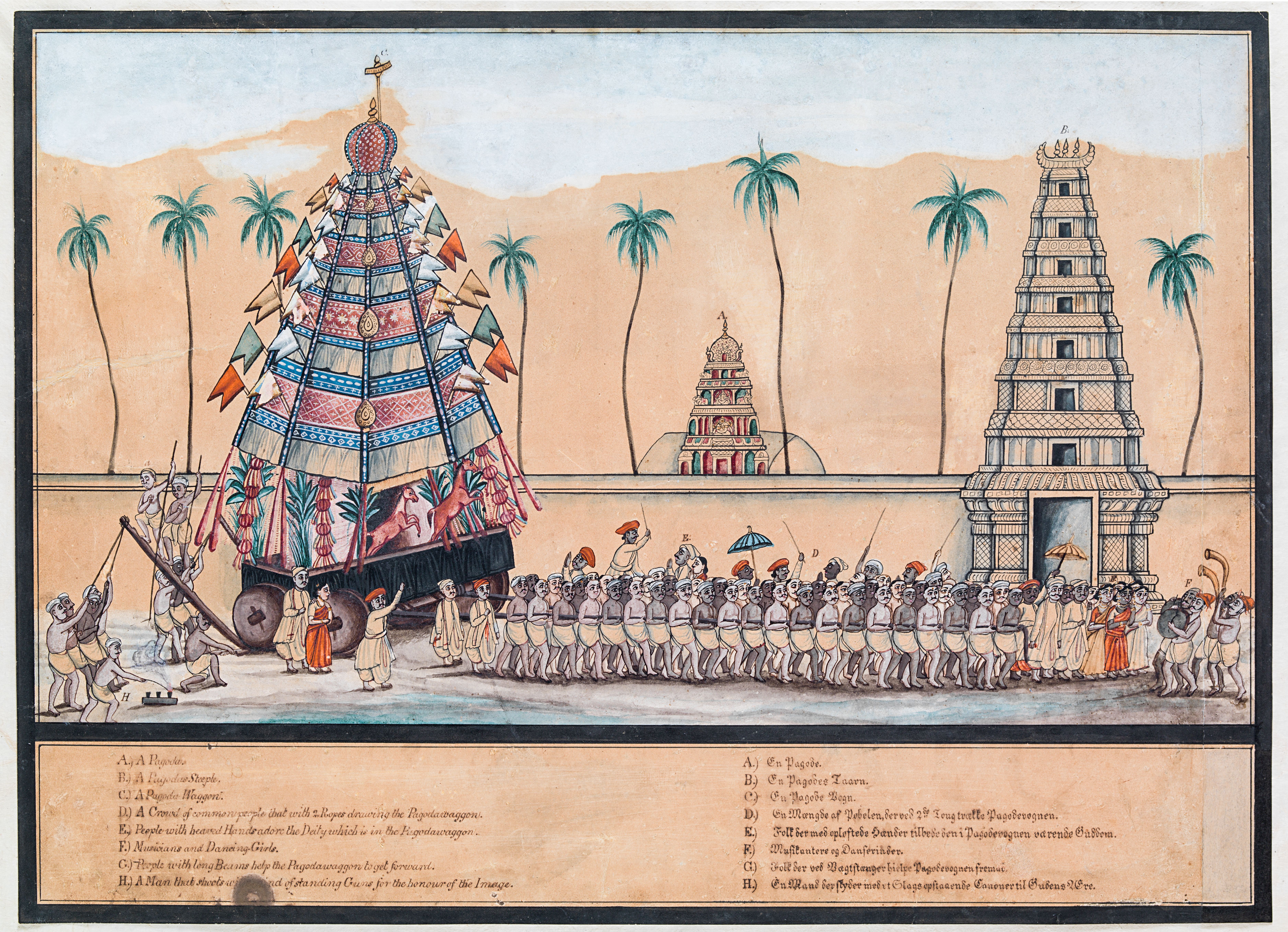
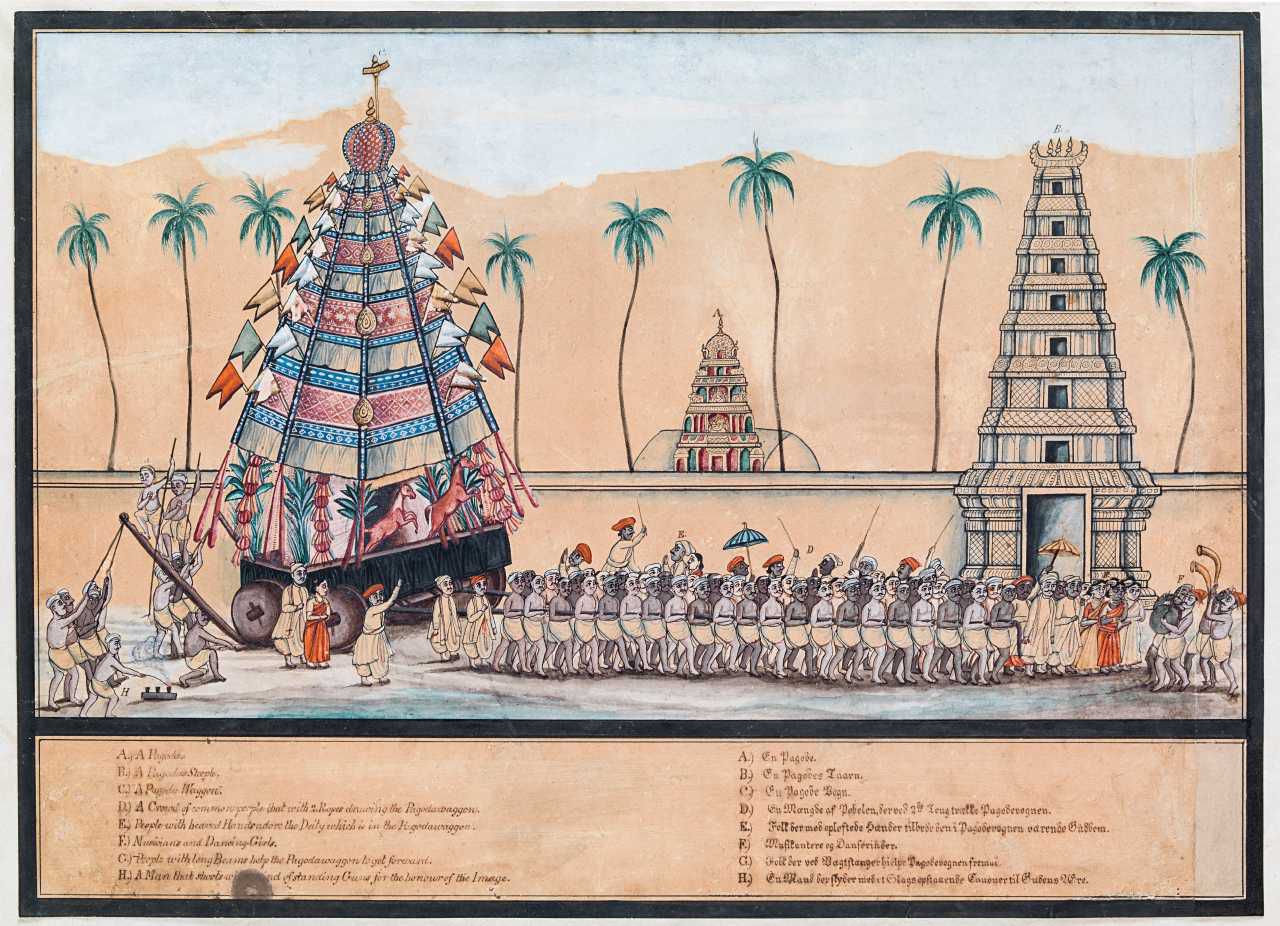
Water colour painting, year and artist unknown. Probably mid 18th century. Drawing of a temple festival procession with musicians, female temple dancers (devidasi) and Brahmin priests with parasols as emblems of high status. The temple priests would lead the rituals by taking the divine image out of the temple and placing it in the temple processional chariot, which is pulled and pushed by men from lower ranking communities. In 1787 in Tranquebar, the local community of the Saluppa caste had refused to carry out their traditional ritual temple obligations of pushing and pulling the temple chariot during processions. This lead to a conflict and members of the traditional upper castes asked the Danish governor to intervene, as they saw that members from the Saluppa caste had gained power and influence by being engaged as assistants and dubashes for members of the Danish government. This relation and their refusal to perform their traditional task led the higher castes to file a complaint. Typically, the temple processions would pass through the main streets of the village where offerings of food (and often coins) would be brought to the procession from the villagers. The temple priest would present food to the divine image and give it back to the villagers as a kind of sacred food to be enjoyed by the family. The precise temple depicted in the drawing is unknown.
Tid
Datering
2016
Senest opdateret
Friday, October 13, 2023
Placering
Koordinater
11.0254, 79.85565
Emneord
Kommentarer
Detaljer
Fotograf
John Lee & Arnold Mikkelsen
Licens
Kilde
Nationalmuseet
Fil-ID
ES-328573
Filnavn
es_Du_703.tif
Original filstørrelse
155 MB
Original opløsning
7504x5428 pixels
OK
Down­load JPEG
7504x5428 pixels - Licens: CC-BY-SA
Down­load original (TIFF Image)
7504x5428 pixels - Licens: CC-BY-SA - 155 MB
Kopiér link
Kopiér HTML-kode
Drawing of a temple festival procession, Tranquebar
Water colour painting, year and artist unknown. Probably mid 18th century. Drawing of a temple festival procession with musicians, female temple dancers (devidasi) and Brahmin priests with parasols as emblems of high status. The temple priests would lead the rituals by taking the divine image out of the temple and placing it in the temple processional chariot, which is pulled and pushed by men from lower ranking communities. In 1787 in Tranquebar, the local community of the Saluppa caste had refused to carry out their traditional ritual temple obligations of pushing and pulling the temple chariot during processions. This lead to a conflict and members of the traditional upper castes asked the Danish governor to intervene, as they saw that members from the Saluppa caste had gained power and influence by being engaged as assistants and dubashes for members of the Danish government. This relation and their refusal to perform their traditional task led the higher castes to file a complaint. Typically, the temple processions would pass through the main streets of the village where offerings of food (and often coins) would be brought to the procession from the villagers. The temple priest would present food to the divine image and give it back to the villagers as a kind of sacred food to be enjoyed by the family. The precise temple depicted in the drawing is unknown.