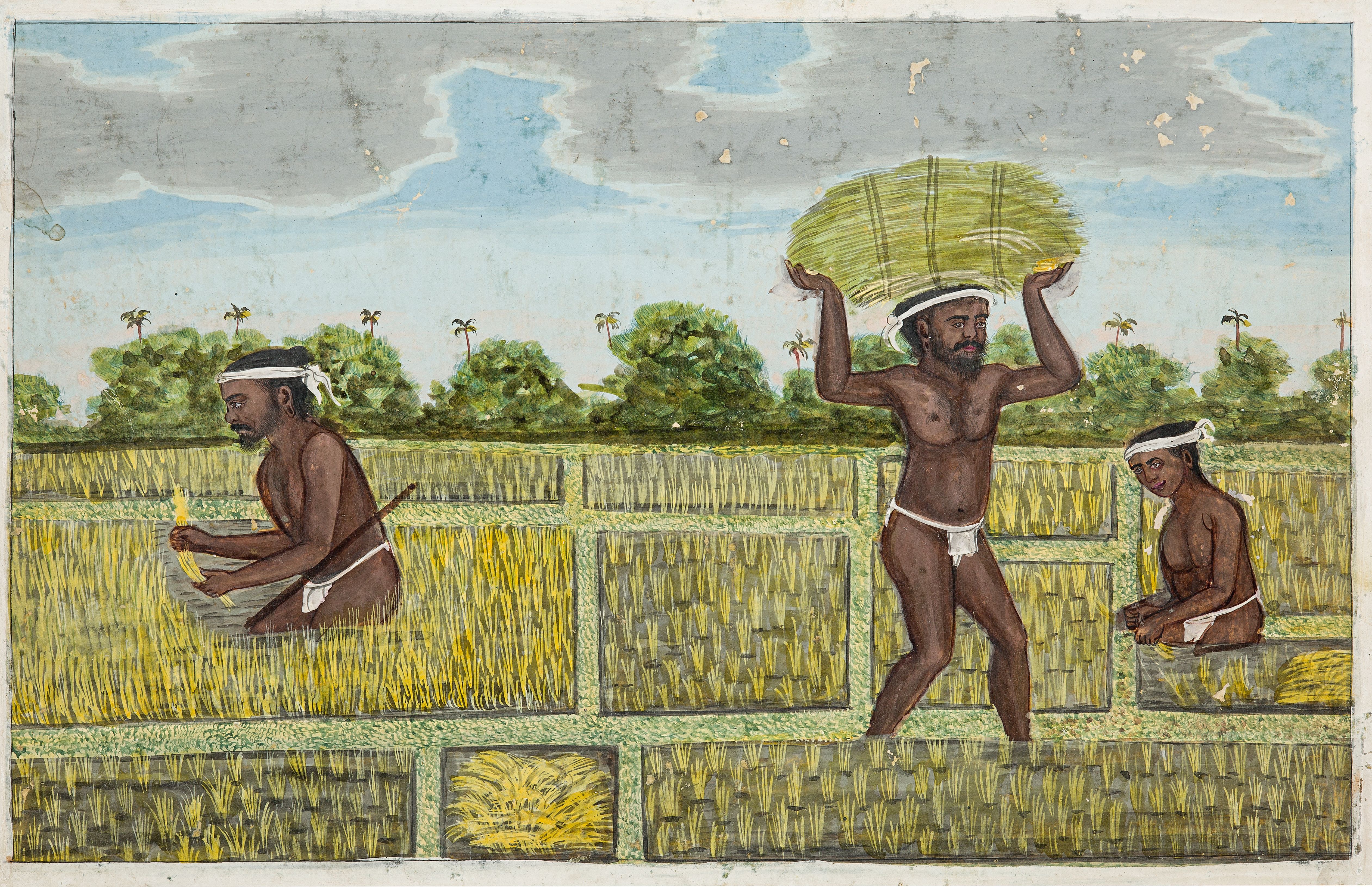
Paddy fields, Tranquebar area ca.1800
Download
Del
Beskrivelse
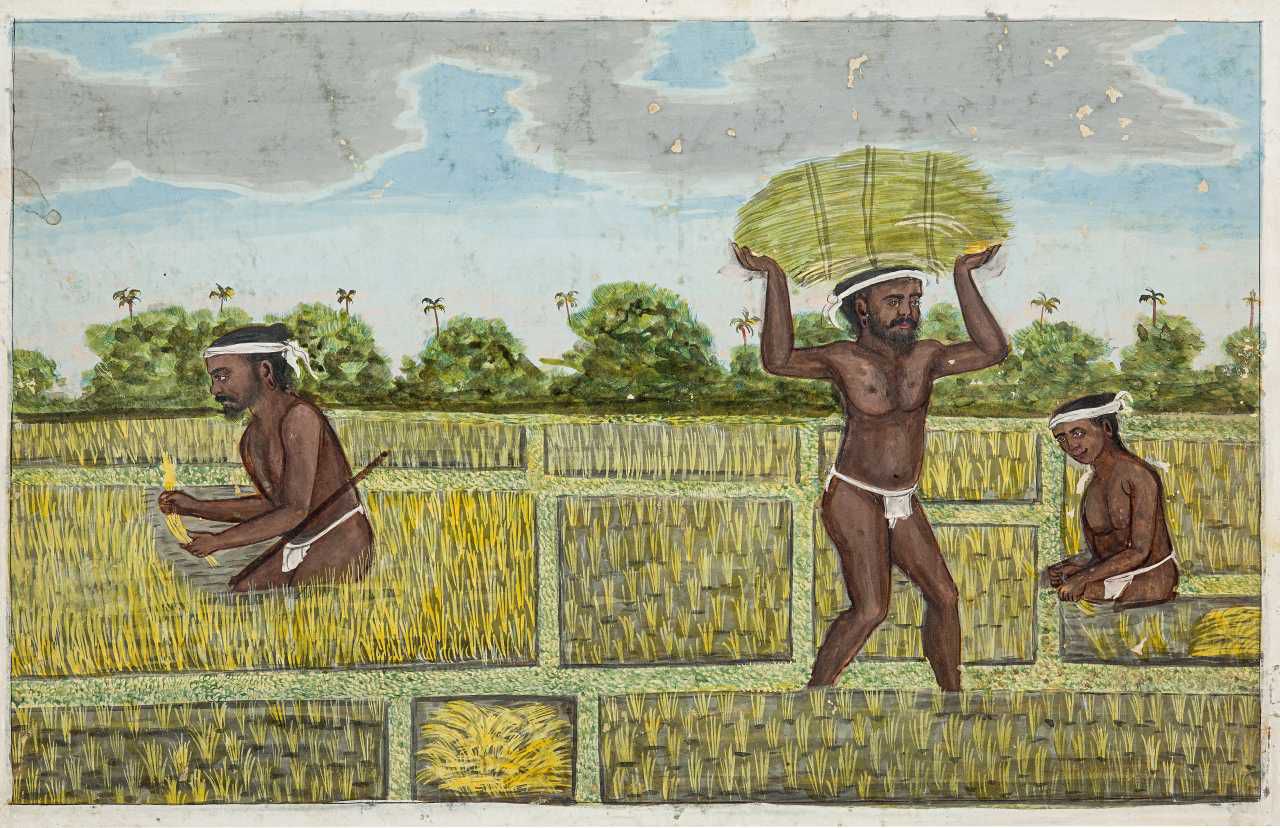
Paddy fields being planted by agricultural labourers. Most agriculture depended on irrigation, and the water in the fields had to be regulated according to crops and seasons. The irrigation system was very advanced, but also expensive to maintain with its many locks, canals and dykes. Company painting, artist unknown, late eighteenth or early nineteenth century. One of a series of Indian miniature paintings depicting a wide range of different occupations, trades and castes in the late eighteenth century. The paintings are in the style known as company paintings, a unique artistic tradition which artists at the royal court in Thanjavur played quite an impressive role in developing. The paintings portray local people, plants, birds, festivals and working scenes and were made to be bought as souvenirs by civil servants employed by the European trading companies. Particularly popular were series with motifs of different castes and occupations depicting husband and wife together with an emphasis on typical tools and differences in costume. These paintings of everyday Indian life may of course be interpreted as a reflection of European attempts to understand the culturally complex Indian society through classification and categorisation. However, being naturalistic yet rather exotic depictions, they may also be seen as an expression of a desire in royal Indian patrons and artists to portray India in a manner comprehensible to the Western eye and present local folklife in an aesthetic way.
Tid
Datering
Monday, December 21, 2015
Senest opdateret
Friday, October 13, 2023
Placering
Koordinater
11.02538, 79.8556
Emneord
Kommentarer
Detaljer
Fotograf
Arnold Mikkelsen
Licens
Kilde
Nationalmuseet
Fil-ID
ES-324741
Filnavn
es_D_1861b.tif
Original filstørrelse
63 MB
Original opløsning
5046x3264 pixels
OK
Down­load JPEG
5046x3264 pixels - Licens: CC-BY-SA
Down­load original (TIFF Image)
5046x3264 pixels - Licens: CC-BY-SA - 63 MB
Kopiér link
Kopiér HTML-kode
Paddy fields, Tranquebar area ca.1800
Paddy fields being planted by agricultural labourers. Most agriculture depended on irrigation, and the water in the fields had to be regulated according to crops and seasons. The irrigation system was very advanced, but also expensive to maintain with its many locks, canals and dykes. Company painting, artist unknown, late eighteenth or early nineteenth century. One of a series of Indian miniature paintings depicting a wide range of different occupations, trades and castes in the late eighteenth century. The paintings are in the style known as company paintings, a unique artistic tradition which artists at the royal court in Thanjavur played quite an impressive role in developing. The paintings portray local people, plants, birds, festivals and working scenes and were made to be bought as souvenirs by civil servants employed by the European trading companies. Particularly popular were series with motifs of different castes and occupations depicting husband and wife together with an emphasis on typical tools and differences in costume. These paintings of everyday Indian life may of course be interpreted as a reflection of European attempts to understand the culturally complex Indian society through classification and categorisation. However, being naturalistic yet rather exotic depictions, they may also be seen as an expression of a desire in royal Indian patrons and artists to portray India in a manner comprehensible to the Western eye and present local folklife in an aesthetic way.